You got pre-approved. You've narrowed down your search. You know exactly where you want to live.Maybe it's because of the schools. Maybe it's the shorter commute. Maybe you've driven through the
Dated: January 2 2025
Views: 79
Imagine a world of intergalactic travel, artificial intelligence, and dystopian futures. Science fiction, or sci-fi, has long been a gateway to exploring not only what could be but also what should be. Each year on January 2, National Science Fiction Day invites fans to dive into the imaginative universes created by some of the greatest storytellers of all time.
Let’s journey through the history of this holiday, celebrate its significance, and uncover some fascinating facts about the genre that continues to inspire generations.
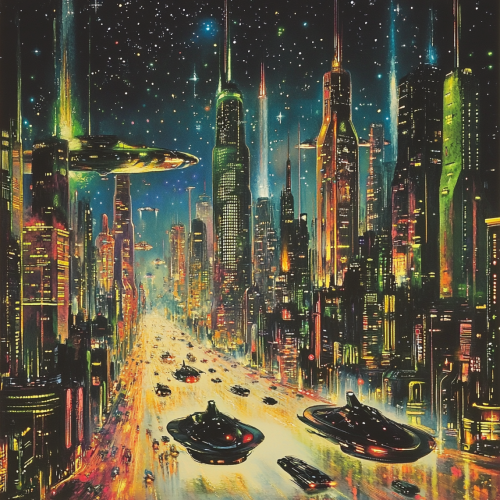
National Science Fiction Day aligns with the birthday of legendary author Isaac Asimov, born on January 2, 1920. Asimov, known for works like Foundation and I, Robot, helped define modern science fiction. His storytelling explored themes of robotics, ethics, and the future of humanity.
The holiday itself, though unofficial, grew in popularity as fans of the genre began using the day to honor not only Asimov but also the broader sci-fi universe. Today, it’s a time to appreciate the movies, books, and TV shows that stretch our imagination and push the boundaries of science and creativity.
The First Sci-Fi Story
The earliest known sci-fi tale is believed to be A True Story by Lucian of Samosata, written in the 2nd century AD. This satirical piece featured space travel and alien life, laying the foundation for a genre that wouldn’t fully bloom for centuries.
Jules Verne’s Prophetic Vision
Jules Verne, the author of 20,000 Leagues Under the Sea and Around the World in Eighty Days, predicted inventions like submarines, space exploration, and even video conferencing in his works.
Star Trek’s Tech Inspiration
The original Star Trek series inspired real-world technological advancements, including flip phones, video calling, and even medical devices. The franchise’s vision of the future continues to shape innovation.
The Rise of Female Sci-Fi Writers
While early sci-fi was dominated by male writers, trailblazers like Mary Shelley (Frankenstein) and Octavia Butler (Kindred) paved the way for a more inclusive genre.
Science Fiction as a Teaching Tool
Many schools and universities use sci-fi literature to explore complex subjects like ethics, philosophy, and environmental science. It’s a genre that educates while it entertains.
The Largest Sci-Fi Fandom
Star Wars boasts one of the largest and most passionate fanbases in the world. With conventions, cosplay, and a vast extended universe, it’s a cultural phenomenon that transcends generations.
Sci-Fi’s Box Office Power
The highest-grossing sci-fi film of all time, Avatar (2009), earned over $2.9 billion worldwide, proving that the genre is as commercially successful as it is thought-provoking.
Books: Dune by Frank Herbert
Published in 1965, Dune is often considered the greatest sci-fi novel of all time. Its complex narrative explores politics, religion, and ecology, inspiring both readers and filmmakers alike.
Movies: 2001: A Space Odyssey (1968)
Directed by Stanley Kubrick and based on a story by Arthur C. Clarke, this masterpiece delves into artificial intelligence and humanity’s place in the universe. Its groundbreaking visual effects set the standard for sci-fi cinema.
TV Shows: Star Trek (1966–1969)
Gene Roddenberry’s Star Trek offered a utopian vision of the future and tackled social issues through the lens of science fiction. Its legacy includes spin-offs, movies, and a devoted fanbase.
Movies: The Matrix (1999)
Blending philosophy, technology, and action, The Matrix redefined sci-fi for a new generation. Its exploration of virtual reality remains relevant in today’s digital age.
Books: The War of the Worlds by H.G. Wells
Published in 1898, this classic novel about a Martian invasion inspired countless adaptations and solidified H.G. Wells as one of the fathers of science fiction.
Science fiction is more than just entertainment; it’s a mirror reflecting society’s hopes, fears, and questions about the unknown. Through imaginative storytelling, the genre tackles critical issues like climate change (The Day After Tomorrow), artificial intelligence (Ex Machina), and space exploration (Interstellar).
The genre’s ability to predict future technologies is remarkable. From satellites (Arthur C. Clarke’s prediction) to self-driving cars (inspired by countless sci-fi stories), what was once fantasy has often become reality.
Whether you’re a Trekkie, a Star Wars aficionado, or a fan of dystopian tales like The Hunger Games, National Science Fiction Day is the perfect opportunity to connect with others who share your passion. Join online forums, participate in social media discussions, or simply share your favorite sci-fi moments with friends.

As a dedicated full-time real estate professional in the Omaha metro area, I am committed to providing you with an exceptional experience and clear communication throughout your real estate journey. B....
You got pre-approved. You've narrowed down your search. You know exactly where you want to live.Maybe it's because of the schools. Maybe it's the shorter commute. Maybe you've driven through the
There’s a lot of noise out there right now about interest rates, buyer hesitation, and what the market is “supposed” to be doing. But here’s what I’m actually seeing in
Every seller wants the same answer. How do you get the most money possible for your home? There may not be a magic trick, but there is absolutely a strategy. In the Omaha metro, getting top dollar
If you’re ready to move on but worried your home needs too much work, you’re not alone. Maybe your kitchen feels a little dated, the paint has seen better days, or the roof could use
 This data is from various Participants of the Great Plains REALTORS® Multiple Listing Service Inc Internet Data Exchange; is for consumers personal, non-commercial use and may not be used for any purpose other than to identify prospective properties consumers may be interested in purchasing; the listing broker is listed on each listing; the information is deemed reliable but not guaranteed, and is copyrighted ©2026 Great Plains REALTORS® Multiple Listing Service, Inc. Information is
deemed reliable but is not guaranteed. Updated on September 23, 2026 2:17 PM UTC
Show More...
This data is from various Participants of the Great Plains REALTORS® Multiple Listing Service Inc Internet Data Exchange; is for consumers personal, non-commercial use and may not be used for any purpose other than to identify prospective properties consumers may be interested in purchasing; the listing broker is listed on each listing; the information is deemed reliable but not guaranteed, and is copyrighted ©2026 Great Plains REALTORS® Multiple Listing Service, Inc. Information is
deemed reliable but is not guaranteed. Updated on September 23, 2026 2:17 PM UTC
Show More...
