You got pre-approved. You've narrowed down your search. You know exactly where you want to live.Maybe it's because of the schools. Maybe it's the shorter commute. Maybe you've driven through the

Dated: October 31 2024
Views: 257
I'm sure you all know today is Halloween. We’ve all learned about it back in school or from classic scary movies. But how much do you know about the true history of Halloween? This holiday has a fascinating backstory stretching back centuries, and it wasn’t always about candy and costumes.
Let’s dive into the real origins of Halloween and explore 10 interesting facts, from candy consumption to how Halloween is celebrated today. You might be surprised by what goes bump in the historical night!
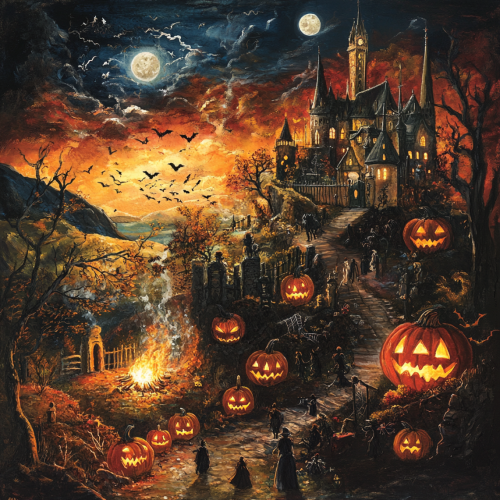
Halloween has roots that go back over 2,000 years to the ancient Celtic festival of Samhain (pronounced “Sow-en”). Celebrated at the end of October, Samhain marked the conclusion of the harvest and the beginning of winter. Celts believed that during Samhain, the boundary between the living and the dead thinned, allowing spirits to roam the earth. People wore costumes and lit bonfires to ward off these roaming spirits.
In the 8th century, Pope Gregory III designated November 1 as All Saints’ Day to honor saints and martyrs. The evening before became known as All Hallows’ Eve, which gradually morphed into the Halloween we know today.
Through the years, Halloween incorporated various customs, from trick-or-treating to jack-o’-lanterns (originally carved from turnips!). Today, it’s a holiday celebrated around the world with costumes, haunted houses, and candy galore.
Halloween Candy Consumption Hits Billions
The Top Halloween Candies Aren't What You'd Expect
Trunk-or-Treat: A New Way to Trick-or-Treat
At What Age Do Kids Stop Trick-or-Treating?
The World's Largest Halloween Parade
Americans Spend Over $10 Billion on Halloween
Halloween-Themed Pet Costumes Are On the Rise
Candy Corn Was Originally Called "Chicken Feed"
Some Pumpkins Are Grown Just for Halloween
Trick-or-Treating Was Once Halted During World War II
Halloween continues to evolve, incorporating both ancient traditions and modern twists. Whether you’re handing out Reese’s cups, attending a trunk-or-treat event, or watching classic horror films, Halloween brings us together in both spooky and fun ways. So, from ancient bonfires to candy-filled streets, it’s a holiday full of history and surprises!

As a dedicated full-time real estate professional in the Omaha metro area, I am committed to providing you with an exceptional experience and clear communication throughout your real estate journey. B....
You got pre-approved. You've narrowed down your search. You know exactly where you want to live.Maybe it's because of the schools. Maybe it's the shorter commute. Maybe you've driven through the
There’s a lot of noise out there right now about interest rates, buyer hesitation, and what the market is “supposed” to be doing. But here’s what I’m actually seeing in
Every seller wants the same answer. How do you get the most money possible for your home? There may not be a magic trick, but there is absolutely a strategy. In the Omaha metro, getting top dollar
If you’re ready to move on but worried your home needs too much work, you’re not alone. Maybe your kitchen feels a little dated, the paint has seen better days, or the roof could use
 This data is from various Participants of the Great Plains REALTORS® Multiple Listing Service Inc Internet Data Exchange; is for consumers personal, non-commercial use and may not be used for any purpose other than to identify prospective properties consumers may be interested in purchasing; the listing broker is listed on each listing; the information is deemed reliable but not guaranteed, and is copyrighted ©2026 Great Plains REALTORS® Multiple Listing Service, Inc. Information is
deemed reliable but is not guaranteed. Updated on September 23, 2026 2:17 PM UTC
Show More...
This data is from various Participants of the Great Plains REALTORS® Multiple Listing Service Inc Internet Data Exchange; is for consumers personal, non-commercial use and may not be used for any purpose other than to identify prospective properties consumers may be interested in purchasing; the listing broker is listed on each listing; the information is deemed reliable but not guaranteed, and is copyrighted ©2026 Great Plains REALTORS® Multiple Listing Service, Inc. Information is
deemed reliable but is not guaranteed. Updated on September 23, 2026 2:17 PM UTC
Show More...
